Answer First
Asphalt paving in Saudi Arabia requires proper ground preparation, compacted base layers, suitable hot mix asphalt, correct paving temperature, strong compaction, and drainage planning because heat, dust, and heavy vehicles can damage weak surfaces quickly.
What Asphalt Paving Includes
Asphalt paving is the full process of preparing the ground, building the base, placing asphalt mix, compacting the surface, and finishing edges. The final black layer is only the visible part of the work.
A proper paving job includes 7 main steps: site inspection, clearing, grading, base preparation, primer or tack coat, asphalt laying, and roller compaction. Each step affects the life of the road or paved area.
The same method can be adjusted for different projects. A road needs traffic flow and drainage. A parking lot needs levels, entrances, and parking layout. An industrial yard needs strength for trucks and loading activity.
Road Asphalt Paving
Road paving needs accurate levels, proper slope, stable shoulders, and strong compaction. Roads carry moving traffic, turning vehicles, braking loads, and sometimes water flow along the sides.
The contractor must check existing ground levels before paving. Low spots collect water. High spots create bumps. Weak edges break when vehicles drive near the side. Good road paving controls all 3 issues before asphalt is placed.
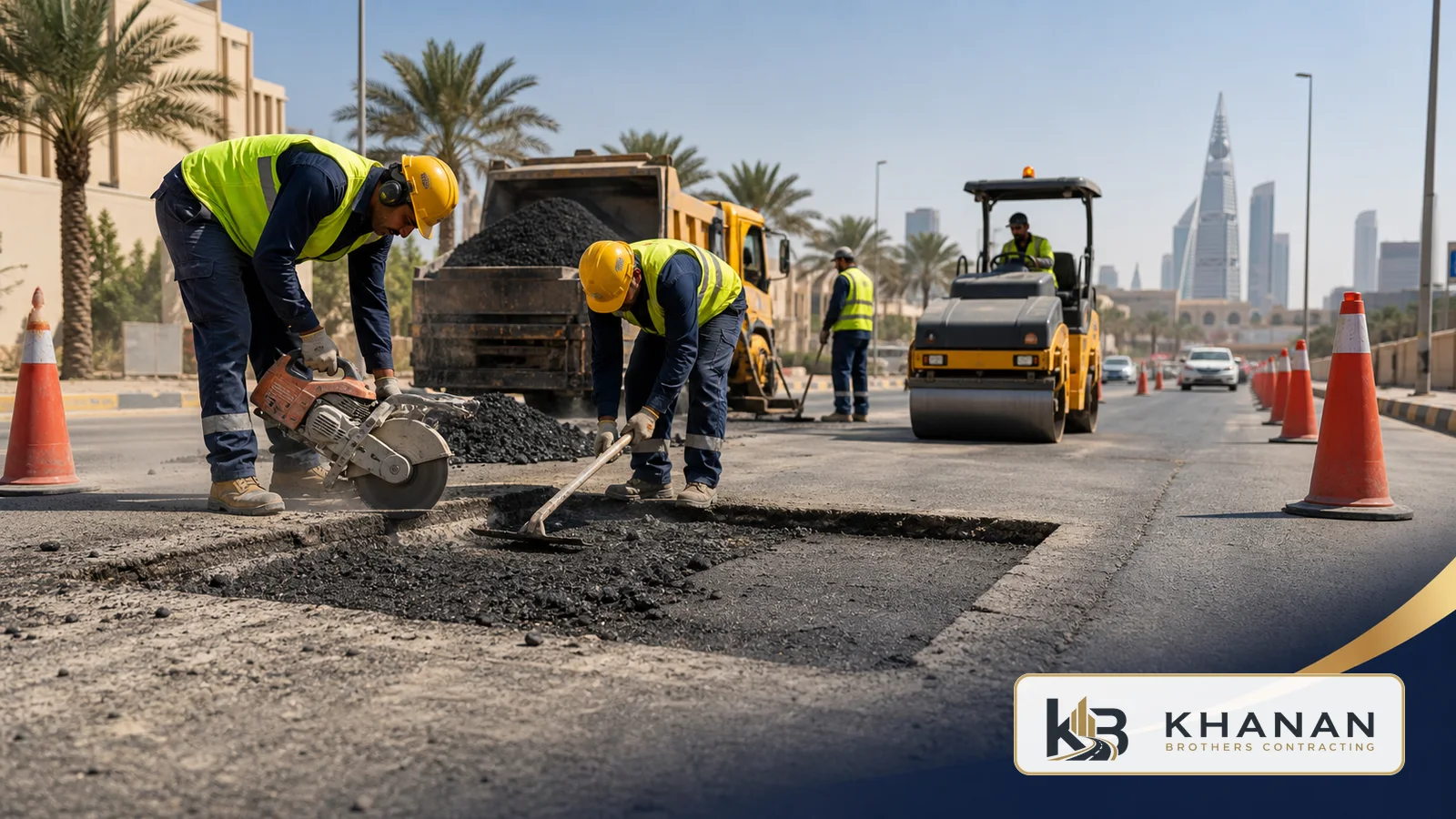
Road asphalt can include new construction, resurfacing, patch repair, shoulder repair, and access road construction. Each type needs a different method. Resurfacing may need milling or leveling, while new roads need full base preparation.
Parking Lot Asphalt Paving
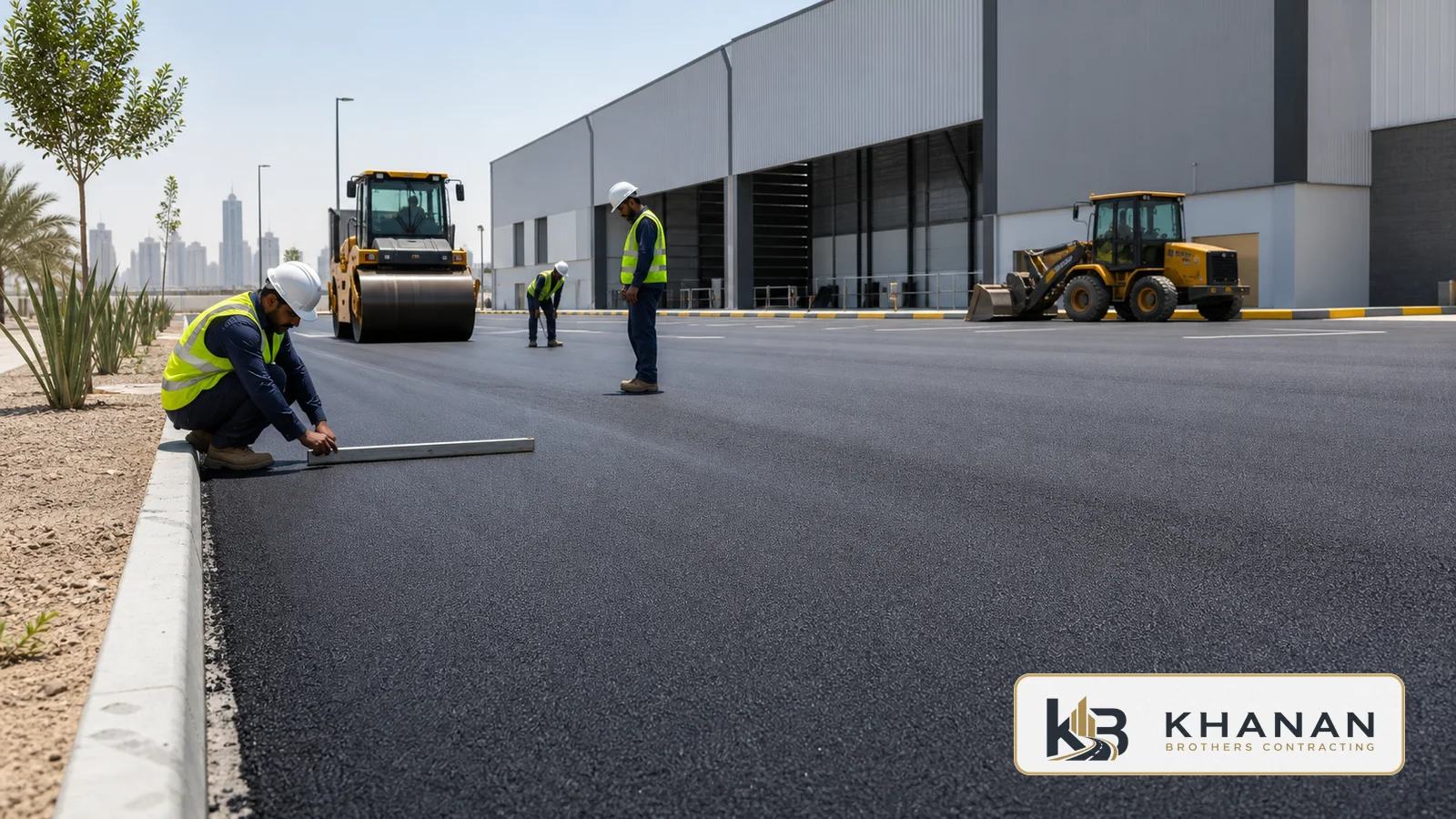
Parking lots need a smooth surface, clear drainage, strong entrances, and safe movement for cars. A parking lot with poor slope holds water, damages striping, and creates weak spots near wheel paths.
Commercial parking areas often fail near entrances, turning zones, drainage points, and dumpster areas. Those zones need stronger preparation because vehicles brake, turn, and stop in the same locations every day.
A good parking lot paving plan includes area measurement, vehicle load review, slope design, edge protection, asphalt thickness, compaction method, and optional road marking. Parking lines, arrows, disabled parking spaces, and speed bumps can be added after curing where required.
Industrial Yard Asphalt Paving
Industrial yards need more strength than normal parking areas. Trucks, forklifts, cranes, loaders, and loaded trailers create heavy pressure on the pavement. Weak preparation causes rutting, depressions, and broken edges.
The contractor should ask what vehicles will use the yard. A site used by light pickups needs a different structure than a site used by 20-ton or 30-ton trucks. Traffic load changes base thickness, asphalt thickness, and compaction effort.
Industrial yards also need clear water movement. Standing water under heavy wheels can damage the surface fast. Drainage channels, slopes, and edge details should be planned before paving starts.
Villa Entrances and Private Driveways
Villa entrances and private driveways need clean finishing, accurate levels, and neat edges. The surface should connect smoothly with gates, interlock, concrete, or existing road levels.
The contractor must check gate clearance, water flow, nearby walls, utility covers, and slope toward the street. A small area can still fail when water gets trapped near the entrance or under the asphalt layer.
For private sites, visual finish matters. The crew should compact properly, keep edges clean, avoid loose material, and leave the area ready for safe use after handover.
Subgrade and Base Preparation
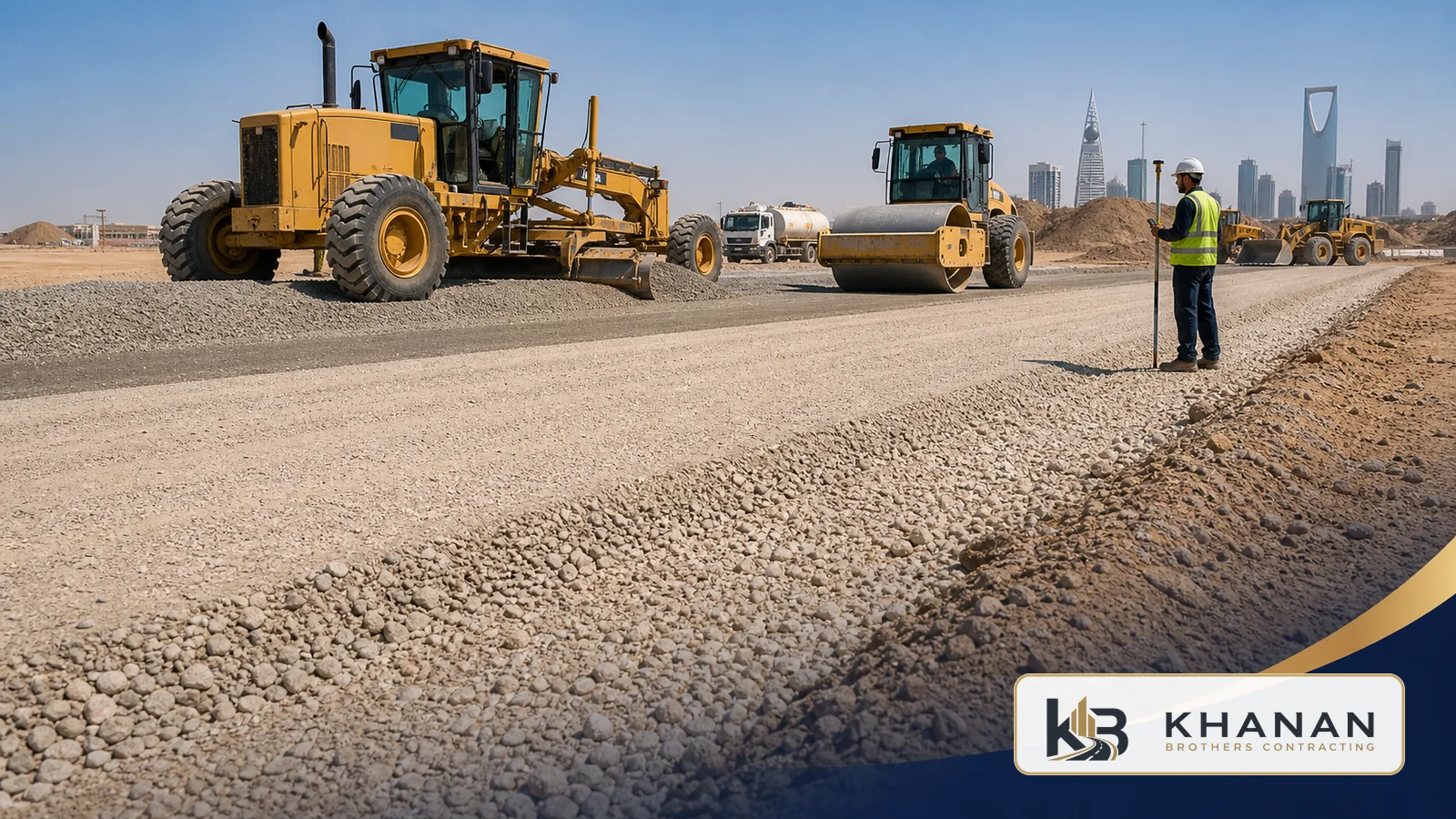
The subgrade is the natural soil or prepared ground under the pavement. The base is the compacted layer placed above the subgrade. Both layers carry traffic load before the asphalt layer receives the final pressure.
Weak subgrade creates settlement. Loose base material creates movement. Poor compaction creates air voids. These issues lead to cracks, sinking, and surface failure.
Good base preparation includes moisture control, material selection, layer-by-layer compaction, and level checking. The contractor should not place asphalt on loose, dusty, wet, or unstable ground.
Asphalt Laying and Compaction
Hot mix asphalt must be placed and compacted while the temperature is suitable. Delays can reduce workability and make the mix harder to compact. Poor compaction leaves air voids that allow water and oxidation damage.
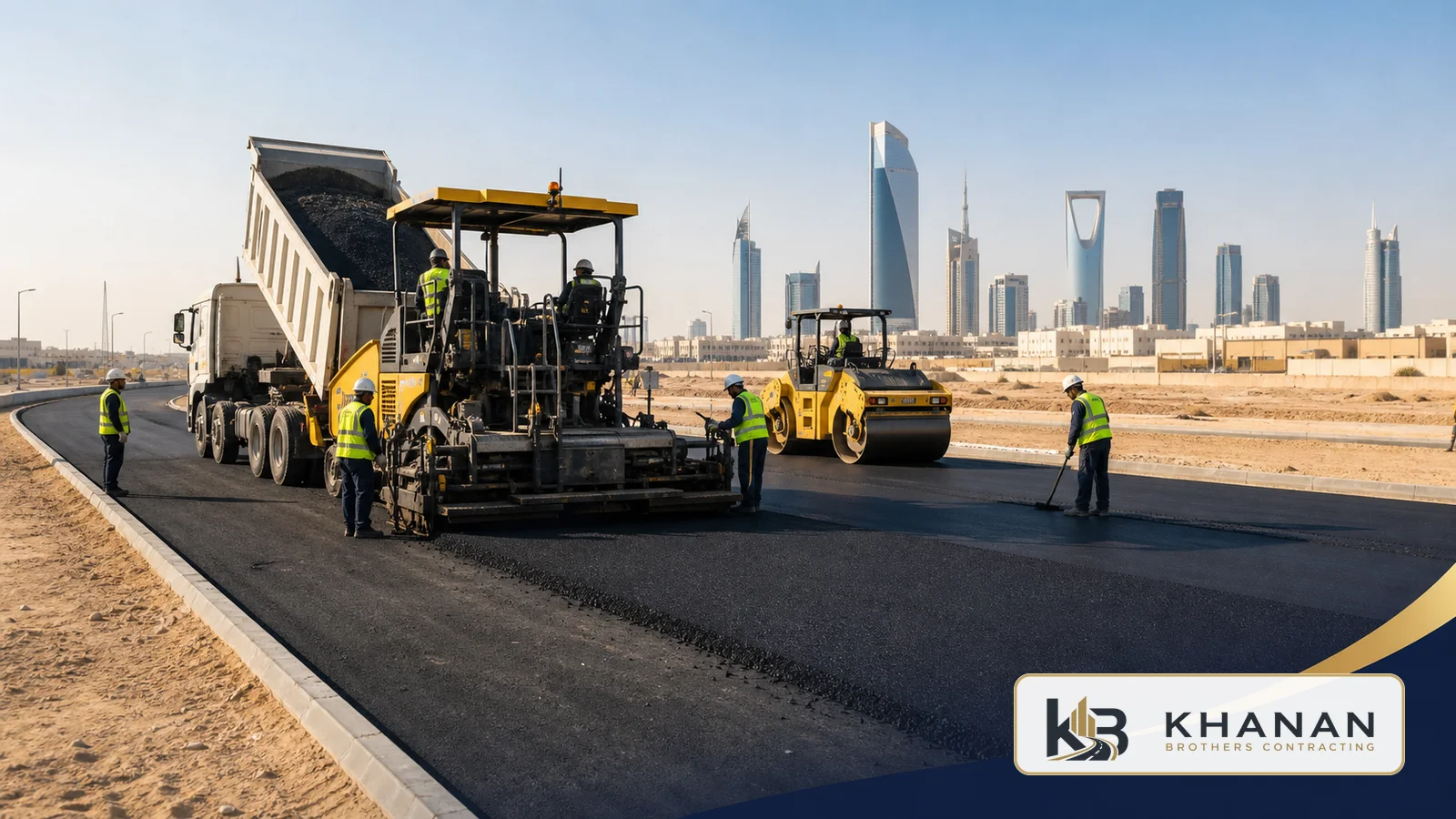
The paver controls spread and level. The roller compactor closes air voids and locks the mix. The crew must manage joints, edges, corners, and tight spaces with the right equipment.
Compaction should be consistent. Over-rolling can damage the surface, while under-rolling leaves weak areas. A skilled operator knows the correct passes, speed, and rolling pattern.
Drainage and Slope Planning
Drainage is not optional. Asphalt surfaces must move water away from buildings, walls, gates, low points, and traffic paths. Water standing on asphalt shortens pavement life.
A good slope is planned before paving. The contractor checks existing levels, water direction, drain locations, and final connections to nearby surfaces.
Common drainage mistakes include flat parking areas, blocked outlets, low edges, and wrong slope toward walls. These problems can be prevented during grading and level setting.
When Resurfacing Is Better Than New Construction
Resurfacing can work when the existing base is stable and the damage is mostly on the surface. The contractor may clean, level, apply tack coat, and place a new asphalt layer over the old surface.
New construction is better when the old pavement has deep cracks, repeated potholes, base failure, standing water, or severe settlement. Placing new asphalt over a failed base hides the problem for a short time only.
A site visit decides the right option. The contractor must inspect cracks, levels, edge condition, drainage, and traffic load before recommending resurfacing or full reconstruction.
How Khanan Brothers Supports Asphalt Paving Projects
Khanan Brothers Contracting supports asphalt paving through site preparation, asphalt laying, repair, spray and sealing, equipment rental, and transport. This helps clients coordinate the work from inspection to completion.
The company can support roads, yards, parking areas, entrances, and commercial sites across Saudi Arabia. Its equipment-based service model is useful when a project needs paving, compaction, material handling, spraying, and transport together.
Clients can request a WhatsApp quote, share project photos and measurements, and arrange a site inspection for accurate pricing.
Practical Checklist
- Share site location, photos, videos, and approximate dimensions before requesting a quote.
- Ask for a site visit when the surface has cracks, potholes, water problems, or uneven levels.
- Confirm asphalt thickness, base preparation, drainage slope, machinery, and timeline in writing.
- Compare scope details instead of comparing only the lowest price.
- Use Khanan Brothers for asphalt work, repair, ground preparation, equipment support, and transport across Saudi Arabia.
FAQ
What is the most important part of asphalt paving?
Base preparation is the most important part because the asphalt layer depends on the strength and compaction below it.
Can asphalt paving be used for parking lots?
Yes. Asphalt paving works well for parking lots when the slope, base, thickness, and compaction match vehicle use.
Why do industrial yards need stronger asphalt?
Industrial yards need stronger asphalt because trucks, forklifts, and loaded trailers create heavy repeated pressure.
Is resurfacing always cheaper than new paving?
Resurfacing is cheaper only when the existing base is stable. Failed base areas need repair before any new layer is placed.
Does Khanan Brothers work outside Riyadh?
Yes. Khanan Brothers provides asphalt-related services across Saudi Arabia, with a base in Riyadh.
Need asphalt support?
Contact Khanan Brothers Contracting for asphalt work, asphalt repair, ground preparation, asphalt equipment rental, spray and sealing, and transport services across Saudi Arabia. Send project photos and site details on WhatsApp to request a fast quote and arrange a site visit.
Request a WhatsApp quote