Answer First
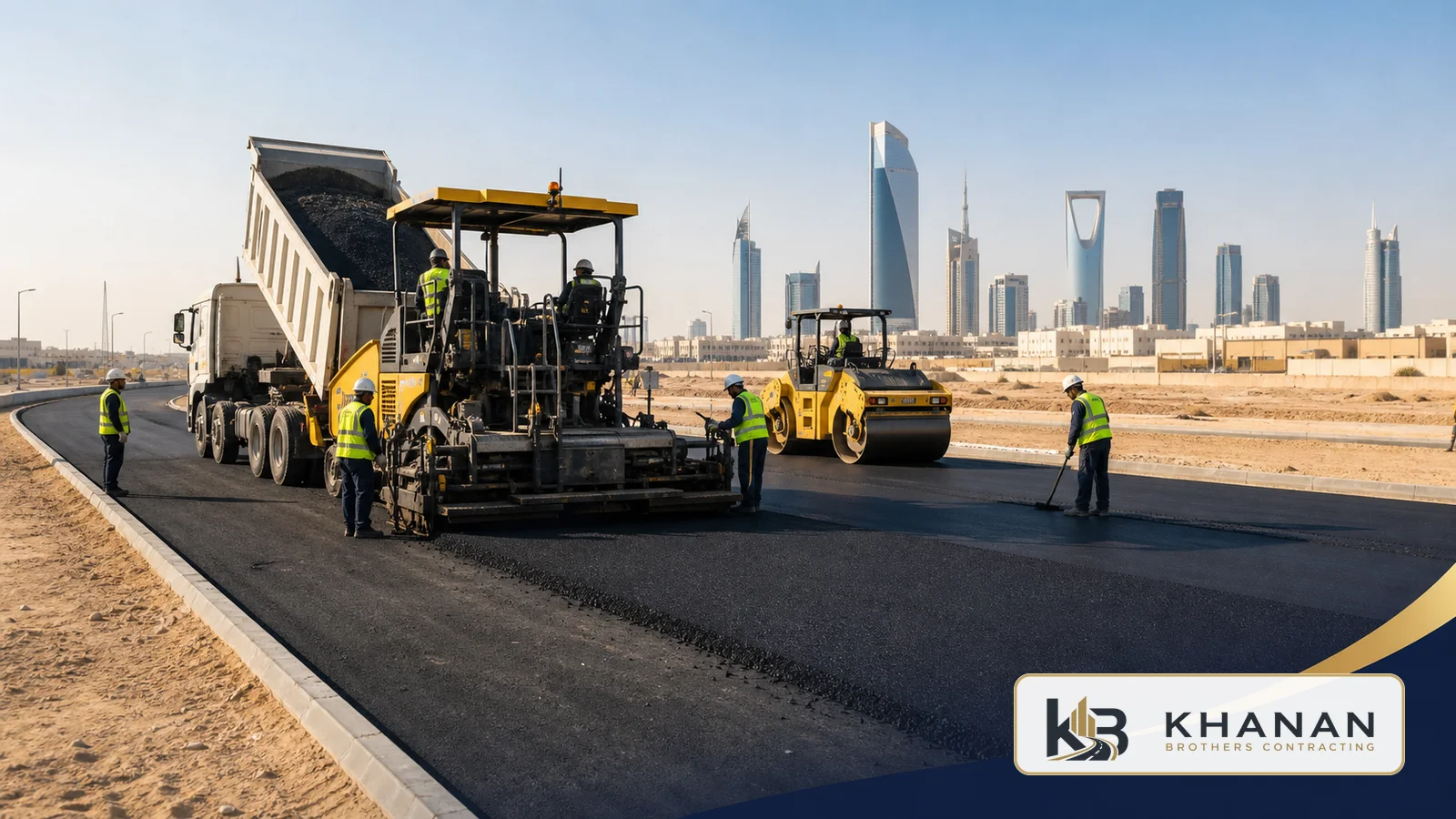
Asphalt repair works when the damaged area is cut, cleaned, corrected at the base when needed, treated with tack coat, filled with suitable asphalt mix, and compacted properly. Resurfacing works only when the existing base is stable.
Why Asphalt Damage Should Be Repaired Early
Small asphalt defects grow fast under traffic and heat. A small crack allows water and dust to enter the pavement. A small pothole grows when vehicle tires break the weak edge. A low area becomes worse when water stands after cleaning or rain.
Early repair protects the base, reduces safety risks, and lowers future cost. Waiting too long can turn a simple patch into a full reconstruction area.
Common damaged areas include road edges, parking entrances, truck turning zones, utility covers, drainage points, and old patch locations. These areas need careful inspection before repair.
Main Causes of Asphalt Failure
Asphalt fails for 7 main reasons: weak base, poor compaction, thin asphalt, water damage, heavy traffic, poor joint construction, and surface aging. One defect can have more than one cause.
A pothole may look like a surface problem, but the base below may be loose or wet. A long crack may come from movement below the pavement, not only from the asphalt layer.
The repair method must match the cause. Filling a pothole without fixing the weak base gives a short-term patch. Correct repair removes the failed material and restores support below the surface.
Pothole Repair Method
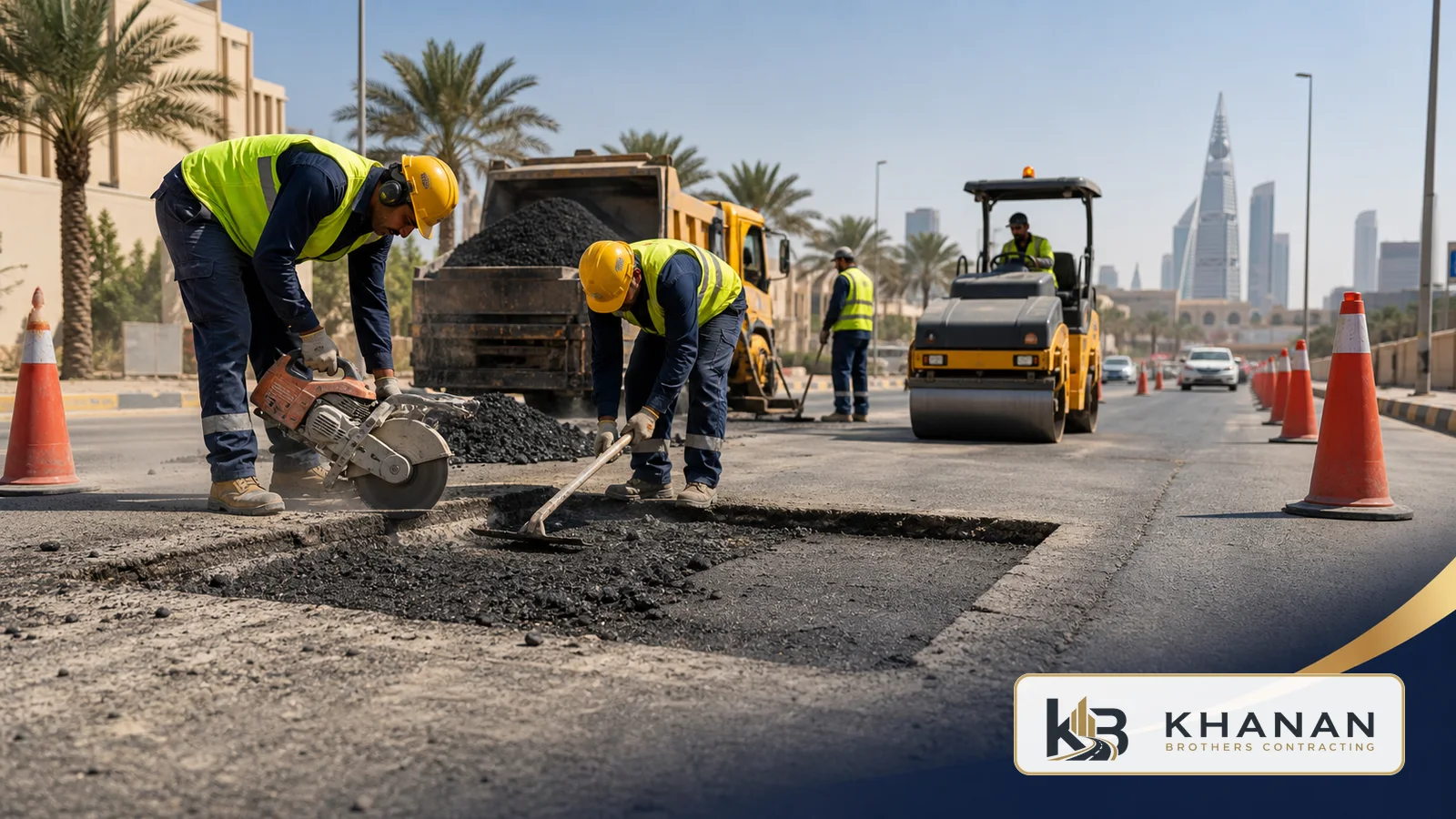
Pothole repair should not be only loose asphalt thrown into a hole. A proper repair includes cutting the damaged edges, removing loose material, cleaning dust, checking base condition, applying tack coat, filling with hot mix asphalt, and compacting the patch.
Square or rectangular cuts help create clean edges. Clean edges hold the repair better than broken, irregular edges. Tack coat helps the new asphalt bond to the old surface.
Compaction is critical. A loose patch moves under traffic and breaks again. A roller or plate compactor must compact the patch based on area size and access.
Crack Repair and Crack Sealing
Crack repair depends on crack type. Small surface cracks can be cleaned and sealed. Wide cracks, repeated cracks, and alligator cracking often mean movement or weakness below the surface.
Crack sealing reduces water entry. It does not rebuild a failed base. The contractor should inspect whether the crack is isolated, structural, edge-related, or caused by drainage.
Alligator cracking needs deeper repair because the pattern usually shows base failure. Sealing the top may slow water entry, but it will not restore pavement strength.
Asphalt Patching for Local Damage
Patching is used when damage affects a limited area. Common patch locations include potholes, settled sections, broken edges, utility cuts, and damaged parking zones.
Good patching follows a clear process: mark the area, cut edges, remove failed material, correct the base, apply tack coat, place asphalt, compact, and finish edges. Each step improves bond and durability.
Patch thickness must match the damage depth and traffic load. Heavy-use zones need stronger patching than light-use pedestrian or villa entrance areas.
When Asphalt Resurfacing Is the Right Choice
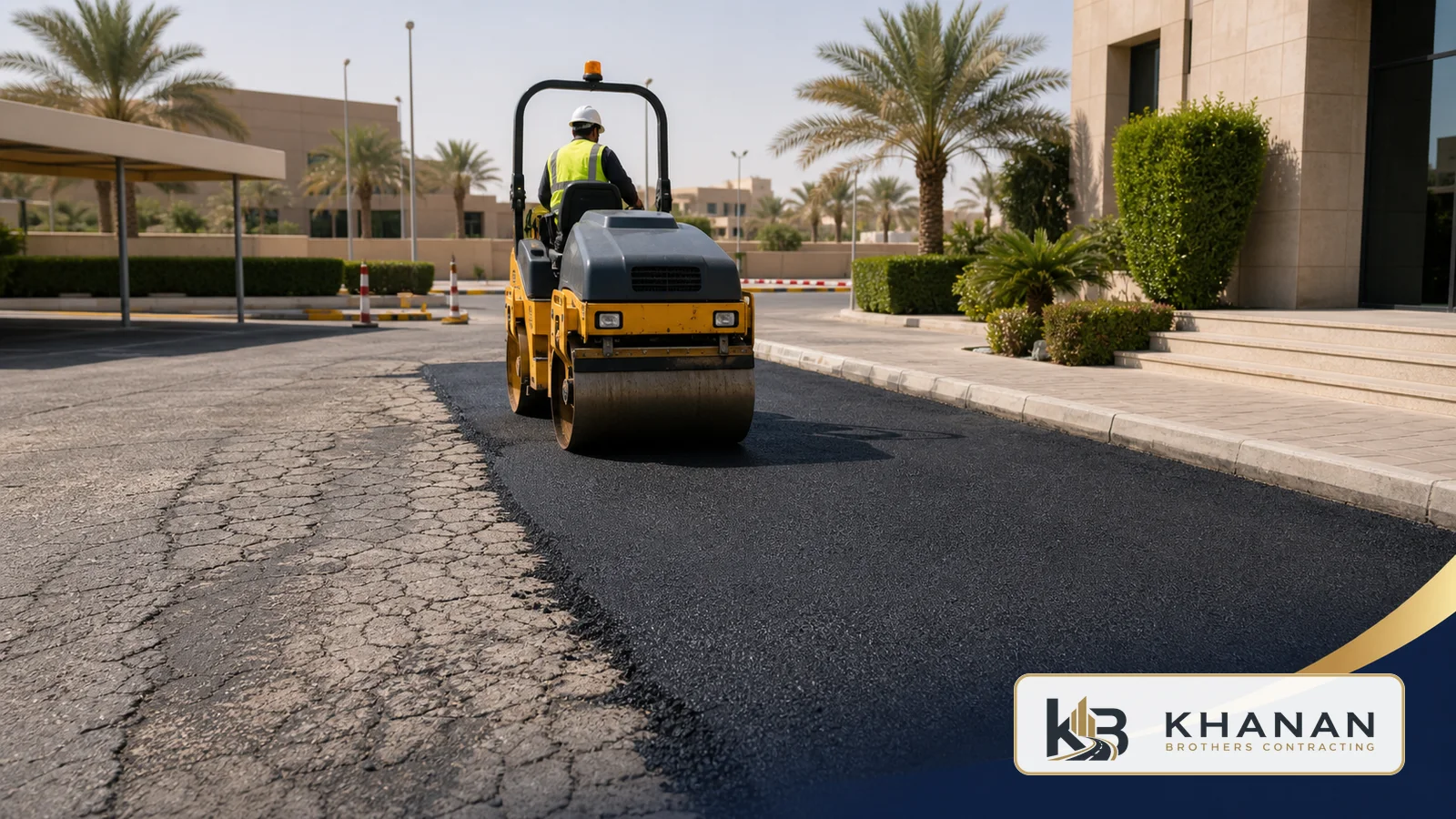
Resurfacing, also called overlay, adds a new asphalt layer over an existing surface. It works when the existing pavement is mostly stable and the damage is surface-level.
Resurfacing can improve appearance, smoothness, and ride quality. It can cover minor cracks, shallow surface wear, and uneven texture after preparation.
Resurfacing is not correct for deep base failure, severe settlement, standing water, repeated potholes, or wide structural cracks. Those problems must be repaired before overlay.
When Full Reconstruction Is Needed
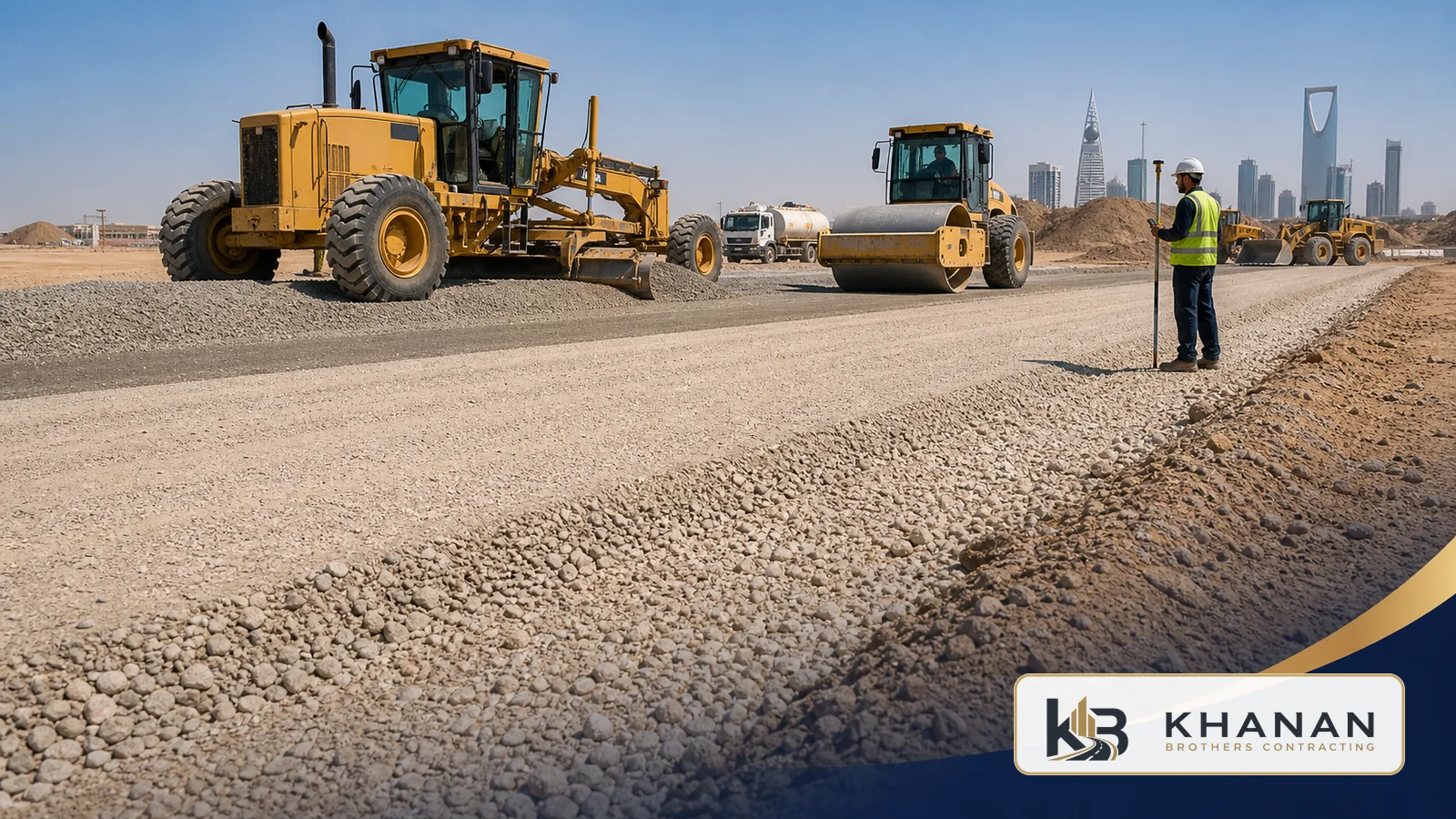
Full reconstruction is needed when the pavement system has failed. Signs include deep potholes, soft base, severe rutting, repeated patch failure, heavy settlement, drainage failure, and broken edges across a wide area.
Reconstruction removes the failed material, rebuilds the subgrade and base, then places new asphalt. This costs more than patching but gives a better long-term result when the old pavement cannot support traffic.
A contractor should explain why reconstruction is needed. The explanation should include depth of damage, base condition, traffic load, water movement, and expected life of the repair.
Drainage Fixes During Asphalt Repair
Water problems must be fixed during repair. Water causes edge breakage, potholes, base softening, and surface cracking. A repaired area will fail again when water still stands on or below the pavement.
Drainage fixes may include regrading, creating slope, raising low spots, correcting edges, cleaning outlets, or directing water toward drains. The solution depends on the site level and surrounding surfaces.
Repair teams should check water flow before placing asphalt. The final surface should move water away from walls, gates, buildings, and traffic paths.
How to Decide Between Patch, Overlay, and Rebuild
Use 5 checks to decide: damage depth, base strength, water movement, traffic load, and repair history. A small isolated pothole may need patching. A worn but stable surface may need overlay. A weak base needs reconstruction.
Repair history matters. When the same area fails again and again, the cause is usually below the surface. Repeating the same patch will waste money.
A site inspection gives the best answer. Photos help start the discussion, but a contractor must inspect levels, base strength, and drainage before final pricing.
How Khanan Brothers Handles Asphalt Repair
Khanan Brothers Contracting provides asphalt repair, resurfacing support, ground preparation, spray and sealing, equipment rental, and transport. This helps repair work move from inspection to patching or resurfacing through one team.
The company can support road repairs, parking lot repairs, yard repairs, entrance repairs, and commercial asphalt maintenance across Saudi Arabia.
Clients can send photos, videos, location, damaged area size, and vehicle load details through WhatsApp for a first review, then arrange a site visit for accurate repair planning.
Practical Checklist
- Share site location, photos, videos, and approximate dimensions before requesting a quote.
- Ask for a site visit when the surface has cracks, potholes, water problems, or uneven levels.
- Confirm asphalt thickness, base preparation, drainage slope, machinery, and timeline in writing.
- Compare scope details instead of comparing only the lowest price.
- Use Khanan Brothers for asphalt work, repair, ground preparation, equipment support, and transport across Saudi Arabia.
FAQ
Can a pothole be repaired without removing old asphalt?
A shallow temporary repair may fill the hole, but a proper repair removes loose and failed material before new asphalt is placed.
When is resurfacing better than patching?
Resurfacing is better when the surface is worn across a large area and the base is still stable.
Why do repaired potholes fail again?
Repaired potholes fail again when the base remains weak, the patch is not compacted, the edges are not cut cleanly, or water still enters the area.
Can cracks be sealed in Riyadh asphalt surfaces?
Yes. Cracks can be sealed when the pavement is stable and the cracks are suitable for sealing.
Does Khanan Brothers repair parking lots?
Yes. Khanan Brothers can support parking lot asphalt repair, patching, resurfacing preparation, and related ground work.
Need asphalt support?
Contact Khanan Brothers Contracting for asphalt work, asphalt repair, ground preparation, asphalt equipment rental, spray and sealing, and transport services across Saudi Arabia. Send project photos and site details on WhatsApp to request a fast quote and arrange a site visit.
Request a WhatsApp quote